




Sustainable Management
FENC has a sound Board operation, which enhances Board performance while leading the FENC team forward.
The Board serves as the highest governing entity at FENC. The 25th Board election was held in 2024, and the result has strengthened Board diversity and succession. All Board members bring a wealth of knowledge and experience to FENC. Equipped with backgrounds in law, finance, economy and sales as well as management expertise, decision-making skills and industry insights, the Board is able to lead the Company to navigate through and respond to various impacts.
FENC’s Board diversity policies are established in accordance with the Taiwan Stock Exchange Corporation Operation Directions for Compliance with the Establishment of Board of Directors by TWSE Listed Companies and the Board's Exercise of Powers with corporate governance evaluation indicators as the reference. Details of the implementation in 2025 are as follows:
Target | 2025 Implementation |
At least one-third of the Board shall be constituted by independent Board members. | After the 2024 Board election, five seats on the Board are held by independent members, which satisfies the requirement. |
The Board shall consist of at least one female member. | The Board consists of two female members, which satisfies the requirement. |
The Board shall consist of at least one non-native member. | The Board consists of members from multiple nationalities, which satisfies the requirement. |
Four Board meetings were held during the reporting year with a director attendance rate of 95%, and a total of 81 resolutions discussed regarding management strategies, risk control, product innovation, carbon reduction, talent incubation and sustainable development. The Board continues to thrive under a robust system.
⇥ Board Regulations
⇥ Director Profile
⇥ The Board Diversity Policy and Current Implementation Status
Functional Committees
Remuneration Committee | Independent Board members serve as the convening body of the Remuneration Committee, which provides assistance to the Board in the establishment of performance review policies governing Board members and managers. The Committee is also responsible for establishing remuneration policy, system, standards and structure. FENC conducts regular performance reviews of employees, managers and Board members through the Remuneration Committee and determines salary, bonus and other forms of compensation. The Committee conducts industry payroll survey and provides recommendation to the Board for discussion. In 2025, the Remuneration Committee convened 3 times, with an attendance rate of 100%. |
Audit Committee Established in 2015 | Audit Committee is composed of all independent Board members and convenes quarterly. The objective of this committee is to monitor the appropriateness of financial reporting, implementation of internal control, compliance with company regulations, management of potential or existing risks, as well as selection and evaluation of the independence and performance of certified public accountants. The Audit Committee convened 4 times in 2025, with an attendance rate of 100%. |
Sustainability Committee Established in 2020 | Independent Board members serve as the convening body of the Sustainability Committee, which actively fulfill the following responsibilities granted by the board of directors, including “Promote and strengthen the corporate governance and integrity”, “Implement and develop matters related to corporate sustainability” and “Supervise other matters related to corporate sustainability approved by the Board”. In 2025 the Sustainability Committee convened 4 times, with an attendance rate of 100%. |
Board Management and Performance Review
- Nomination
Board nominations are made in accordance with Election Procedures of Director and Corporate Governance Principles, while comments from the independent Board members as well as the candidates’ experience and education are also taken into account. Other considerations include diversity, independence, ability to respond to corporate impacts and stakeholder feedbacks. Board member elections are held during the shareholder meetings after Board review. In accordance with Company Law, shareholders with over 1% of the issued shares of FENC may nominate candidates for the Board in writing. - Independent Supervision
The Board exercises its power and fulfills its duties in accordance with the Articles of Incorporations, Rules of Procedures for Board of Directors and all applicable regulations. Based on the provisions regarding conflicts of interest in Meeting Rules of Board of Directors, Board members or the juristic persons they represent with conflicts of interest regarding agenda items shall explain to the Board the essential contents of such interest. In the presence of potential damages to the Company’s interest, said Board members shall recuse themselves from discussing or voting on the agenda item in question, and from voting on behalf of another Board member. There were no incidences of conflicts of interest among the Board members in 2025. - Training
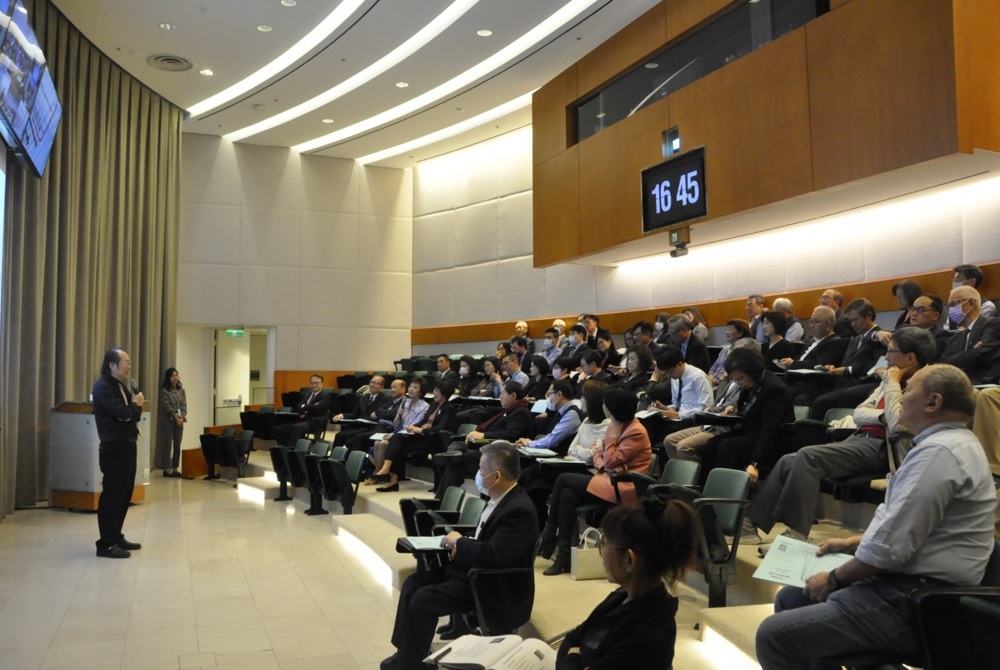
Each year, FENC holds two training sessions for the Board members with external experts as the lecturers. The two 2025 lectures emphasized risk control, specifically, geopolitical and supply chain risks as well as emerging technological risks:
Geopolitical risks: Professor Yun-Peng Chu of the Department of Economics at National Taiwan University spoke on “Corporate Strategies for U.S. Tariff Policy and Supply Chain Restructuring.” Professor Chu provided his analysis on setting the course of corporate strategies amid the U.S. tariff policy to cope with risks resulted from changes in the global political and economic landscape as well as supply chain restructuring.
Emerging technological risks: Director Yung-Hui Li of the Artificial Intelligence Research Center under Hon Hai Research Institute shared his insights during the lecture, “Risks of Corporate AI Transformation.” He explored potential information risks and governance during the industrial application of generative AI and autonomous training of large language models.
All Board members completed a minimum of six training hours in the reporting year, maintaining professional capabilities of FENC’s highest governing entity in managing, identifying and responding to risks.
In addition, to enhance the understanding and decision-making capabilities regarding sustainability management among the Sustainability Committee members, Dr. Je-Liang Liou of the Chung-Hua Institution for Economic Research was invited to the committee meeting on October 21, 2025, during which, he gave the keynote speech, “From Incentives to Responsibilities: The Development of Carbon Pricing in Taiwan.” - Remuneration and Evaluation
FENC self-evaluates the performance of the Board, Board members and functional committees annually in accordance with the FENC Board Performance Evaluation Rules. All 2025 results reached “exceed expectation,” which is the highest level. Additionally, a Board performance evaluation is conducted at least once every three years by an independent external agency or a team of experts and scholars. The last evaluation was conducted in 2023 by EY Transaction Advisory Services Inc. The Board was evaluated for its performance in “structure,” “people” and “process and information.” The ratings the Board received are “advanced,” “advanced” and “benchmark,” respectively.
Actual percentages and dollar amount in compensations provided for the Board members are determined by the Remuneration Committee based on the Articles of Incorporations. Compensation for the Board members in 2025 account for 1.85% of the net profit after tax.
To add momentum for the promotion of sustainability, remuneration for sustainability governance units and senior executives is linked to their performance of reaching sustainability goals.
The Sustainability Committee, which is governed by the Board, is composed of two independent and one non-executive director. Remuneration for the committee members is linked to the sustainability performance. Bonuses are awarded based on the progress of reaching sustainability goals to emphasize the responsibility and commitment to promoting sustainable development at the governance level.
With internal approval, the model has been presented to the Remuneration Committee. Through a systematic design connecting sustainability performance with remuneration and bonuses, the mechanism has helped FENC promote the culture of sustainability from the top down and fulfill its commitment to sustainable corporate governance.
Sustainability Targets Linked to Remuneration for Sustainability Committee
- Reduction in energy consumption per unit of production
- Reduction in GHG emissions
- Percentage of revenues from sustainable products
- Reduction in air pollutant emissions
- Reduction in water withdrawal per unit of production
- Zero fires and chemical spills
- Number of community events, engagement, exchanges or non-profit activities organized or with FENC participation
Shareholder Benefits
FENC values the rights of each shareholder and treats every one of them with equal importance, which is in accordance with Company Act, Securities and Exchange Act and other applicable regulations. Shareholders may exercise their rights to vote and participate in the decision making process during the shareholder meetings. In addition, accumulative voting system, which is advantageous for minority shareholders, is adopted for Board election in accordance with Company Law.
Proposals pending ratification, matters for deliberation and elections are voted on as individual motions with the option of electronic voting. The result is disclosed immediately during the shareholder meeting. In addition, the Company designates special agents to handle investor relations, and provides contact information to investors and shareholders in order to strengthen stakeholder dialogues and respond to their comments and suggestions.